
Keeping Cold War History Alive
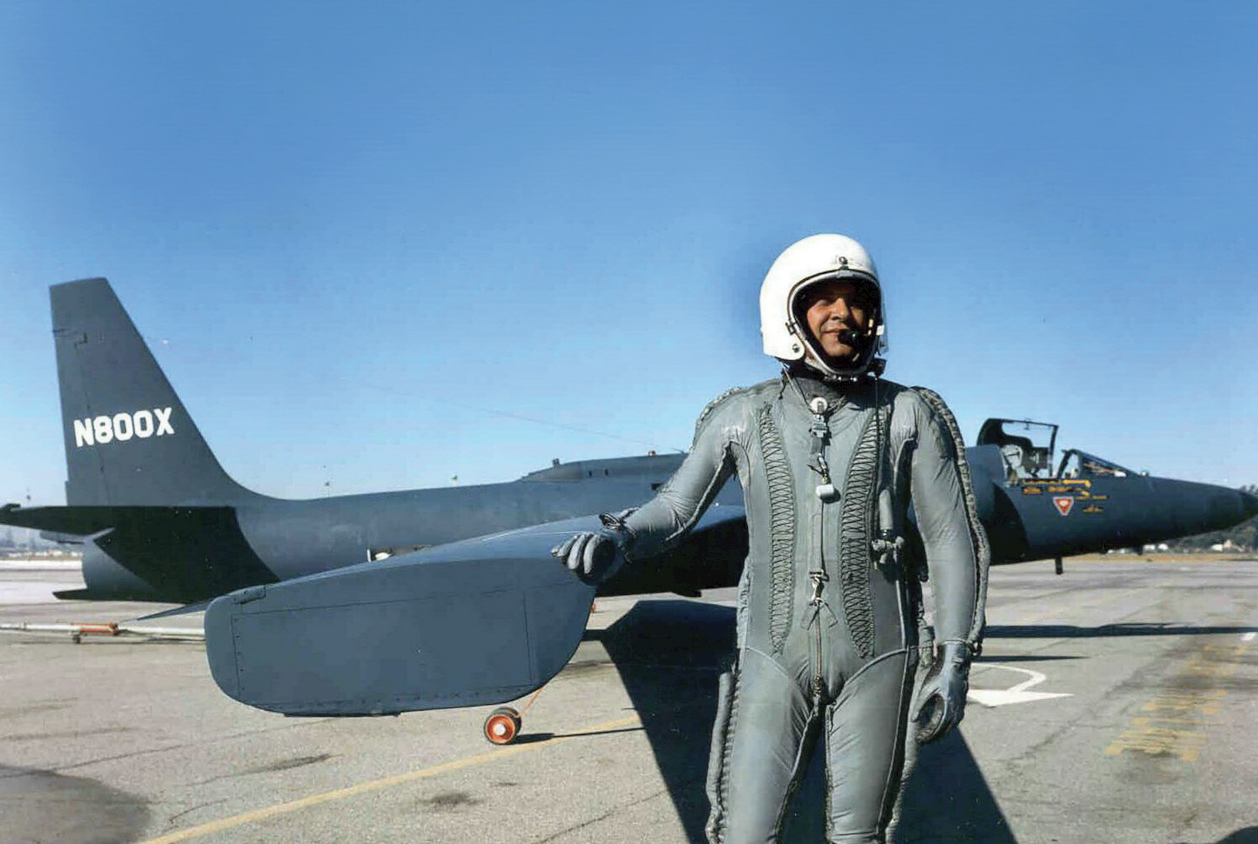
The Cold War never erupted into direct war between the United States and the Soviet Union, but for nearly half a century the world lived under the constant threat that it could.
Few people experienced that tension more personally than the family of Francis Gary Powers.
The CIA U-2 pilot became one of the defining figures of the Cold War after his reconnaissance aircraft was shot down over the Soviet Union on May 1, 1960, triggering an international crisis that exposed one of America’s most secret intelligence programs, heightened tensions between the world’s two superpowers and became one of the most famous espionage stories of the 20th century.
More than 65 years later, his son, Gary Powers Jr., has made it his life’s work to preserve that history and help a new generation understand the era that shaped much of the second half of the 20th century.
Powers stopped by the Albany News this week while traveling through West Texas, sharing his father’s remarkable story and discussing the work he has spent the past three decades doing to preserve the legacy of those who lived through one of history’s most uncertain periods.
“My whole mission in life is to honor Cold War veterans, preserve Cold War history and educate kids on the time period,” Powers said. “Kids today have no concept of what the Cold War is.”
Francis Gary Powers served as a U.S. Air Force pilot before being recruited by the Central Intelligence Agency in 1956 to fly the newly developed Lockheed U-2 reconnaissance aircraft. Flying at altitudes exceeding 70,000 feet, the U-2 photographed Soviet missile sites, airfields and military installations at a time when reliable intelligence was critical to national security.
After four years of successful missions, Powers’ aircraft was struck by a Soviet SA-2 surface-to-air missile near Sverdlovsk on May 1, 1960. He survived the crash by parachuting to the ground but was immediately captured. Following three months of interrogation by the KGB, he was convicted of espionage and sentenced to 10 years in prison. He ultimately served 21 months before being exchanged for Soviet intelligence officer Rudolf Abel during the historic prisoner swap at Glienicke Bridge in Potsdam, Germany, on Feb. 10, 1962.
The incident quickly became one of the defining moments of the Cold War. Believing Powers had died in the crash, the United States initially claimed the aircraft was a weather research plane that had strayed off course. Soviet Premier Nikita Khrushchev later revealed that both the pilot and much of the aircraft had survived, exposing the secret CIA mission and embarrassing the Eisenhower administration before a planned summit with Soviet leaders.
Gary Powers Jr. was only 12 years old when his father died in a helicopter crash in California in 1977. As he grew older, he began researching the man behind the headlines, speaking with former CIA officers, pilots, historians and family members. That search eventually became a career.
Today, Powers has written several books, founded The Cold War Museum in Virginia, lectures across the United States and internationally, leads educational tours highlighting Cold War history and espionage, and served as a technical consultant for Steven Spielberg’s 2015 film Bridge of Spies, helping ensure the historical accuracy of the film depicting his father’s exchange for Rudolf Abel.
While the famous events surrounding Francis Gary Powers unfolded thousands of miles away over the Soviet Union, Albany has its own place in Cold War history.
During the early 1960s, an Atlas F intercontinental ballistic missile stood on constant alert just south of Albany as part of the Strategic Air Command’s nuclear deterrent. One of 12 Atlas missile sites operated by the 578th Strategic Missile Squadron at Dyess Air Force Base, the underground complex housed a nuclear-armed missile capable of striking targets deep inside the Soviet Union. Around the clock, Air Force crews remained prepared to launch within minutes if the order was ever given.
For local residents, life continued much as it always had. Ranchers worked cattle, families attended school events and businesses opened their doors each morning. Just a few miles away, however, one of the nation’s most powerful weapons waited silently beneath the prairie as part of America’s effort to deter nuclear war. Fortunately, that launch order never came.
Although the Atlas missile program was eventually replaced by more advanced systems, it remains a reminder that even rural communities like Albany played a role in one of history’s greatest geopolitical standoffs. The Cold War was not confined to Washington, Moscow or Berlin—it reached communities across America, including Shackelford County.
Powers believes those local stories are just as important to preserve as the famous ones.
“The Cold War affected every American,” he said. “If we don’t preserve it and teach it, future generations won’t understand what that generation lived through.”
Today, Powers continues to lecture throughout the United States and internationally on Cold War history, leads educational spy tours in Washington, D.C., and Europe, and operates the Cold War Museum in Virginia. He is also the author of several books on the Cold War and serves as publisher of Cold War Times, a publication dedicated to preserving Cold War history. More information about his books, lectures and tours is available at GaryPowers.com, SpyTour.com and ColdWar.org.”
